
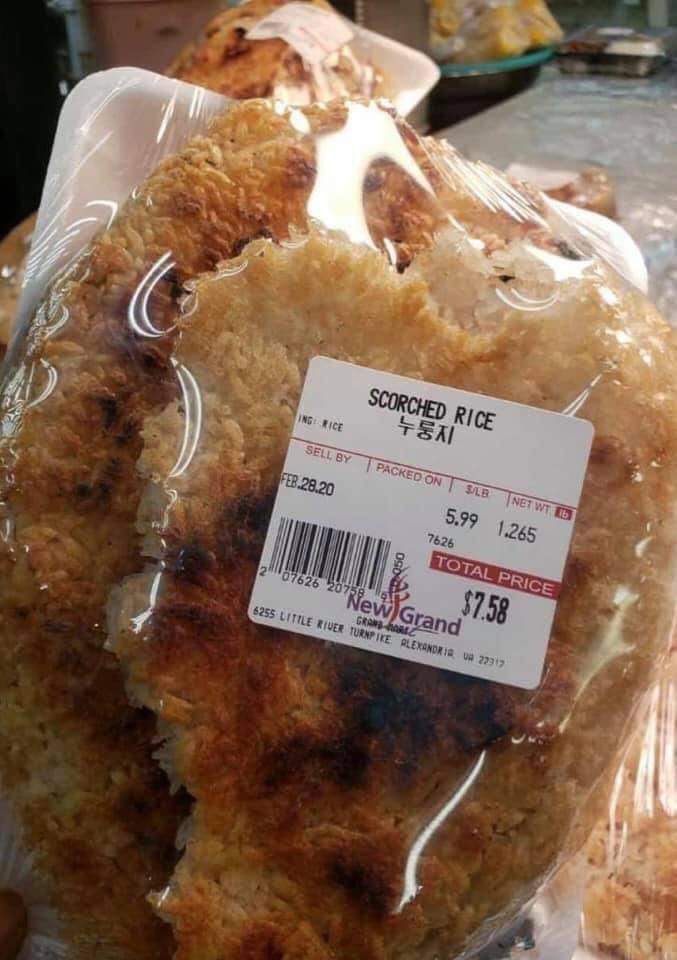
Some things are common across generations. At boarding schools, especially in Zimbabwe, the term Goko (Crust) invokes some memories to those who attended or attends boarding schools. To this constituency, a crust is a crust(Goko iGoko) – a crust of bread, a crust of sadza (Goko reSadza) or a crust of rice. I remember over two decades ago, at the beloved mission school, Sanyati Baptist High School, 96km west of the City of Kadoma, the school which seems to be producing media personnel for the country like a nest of ants. Barnabas Thondlana, Robson Sharuko, Tarzan Mandizvidza, Avis Shamuyarira, Richard Muponde and Tatenda Chipungudzanye are some of the names which crop to mind. Funny enough, athletics champions were made along the famous ‘Matoto Highway‘ or from the direct road, from the boys hostels, which passed through the basketball court and the church to the school, as the boys raced to the dining hall for the sole purpose of making it for Goko. It was funny because the usual suspects never made it into the school athletics team but Goko time was Goko time. Besides the crunch and smoky taste of Goko, no other value was attached to it. It came as shock when over two decades later, a photo of Rice Goko, well packaged and clearly labelled and priced trended on social media. Surely if Goko is now being sold in retail shops then the gods must be crazy. The economy has rapidly spiralled down, especially during the past year.
A year ago, I started this blog. The economy was weak but not as it is now. I had my VISA debit card, my bank account and salary was denominated in USD. I had a TelOne ADSL intenet link, the pleasure of DStv, Kwese TV and Kwese Play. Whenever I wanted to research for any blog post I had it easy including the pleasure of buying direct from Amazon Books. Fast forward to a year later. The ADSL set up is now a display of hardware. TheTelOne link at the border broke down and enquries at TelOne didn’t bring any joy. TelOne can’t replace the broken down component because they have neither spare components nor the foreign currency to import them. The alternative broadband internet from Econet or NetOne could have covered that gap where it not that the cost of data has escaleted to such astronomical levels that its now a luxury in a country where, to access the basic roller meal, one needs a coupon.
The general sentiment about why the Kwese deal didn’t last in Zimbabwe is that the company was only here for the USD, once the monetary and fiscal policies changed, the invester opted out. Though I felt hard done, I would have made the same decision- private investors need returns on investment (ROIs). Staying at geographic area where even the terrestial ZBCTv has no signal means one would be motivated to stick to the most basic subscription of Dstv where it not for the permanent ZESA power cuts.
When will this economic Harakiri stop? Life has become an everyday struggle. Some things we took for granted a year ago are beyond our reach. One would afford to buy hard copies of the daily newspapers everday without betting an eye lid. Alternatively, for the environmentally conscious an eprint subscription would have been equally good. Not anymore. Besides the Zimpapers combo subscription platform Newshub, which can be paid for using ecocash, onemoney or zimswitch compliant local cards one needs a forex laden debit card to subscribe to the financially influential publications such as the Financial Gazette or Daily News. The price of the hard copies are beyond the reach of your average working reader. When the South African based Sunday Times comes in as the cheapest weekend weekly newspaper then you know that something is wrong with Zimbabwean, goods and services, pricing.
With abated breaths, we await to see if indeed the economy follows the politics, so many case studies are at handy in the year 2020, Britain with its Brexit, South Africa with its ‘New Dawn’, USA with its Make America Great Again (MAGA), China with its Belt and Rail and Rwanda with its Rwanda Model. In Zimbabwe two years down the line, we are now worse off than we were. An ordinary citizen’s year seems to be now 730 days.
More than three decades ago, as one approached the main entrance at Sanyati Baptist Hospital, there were bold and big words painted, “HEALTH FOR ALL BY THE YEAR 2000“. By then the year 2000 seemed to be some many light years away. It was rare for a patient to be transfered to Kadoma General Hospital or worse still to Parirenyatwa Group of Hospitals, which was the hierarchial order of the health referral system during those years. We never heard of patients going to South Africa, India or China for medical tourism. We never new of Glen Eagles Medical Facility in Singapore. Talking of Singapore brings an amused laugh on my lips – the first time I saw the word, I was in Grade One, was on a door lockset written, Made in Singapore, and made a Shona word spin of it. The health system was vibrant then, all our best medical personnel were home and we had expatriates as well. Their standard of living was comparatively high.
At one point there was, “VISION 2020” We are in 2020 and with hindsight one might argue that The Transitional Stabilisation Program (TSP) replaced the Vision 2020 since the Mugabe era was over and its now a Mnangagwa era. Time is a positive cumulative variable since the Big Bang billions of years. Time will tell, the late great Jamaican reggae artist Bob Marley pined, “… Time alone, oh, time will tell, Think you’re in heaven, but you’re living in hell, x3, Time alone, oh, time will tell, You think you are in heaven, but you living in hell…” We are past half way through the second month of the first year of a new decade. VISION 2030 is it? Time will tell if our shops won’t be selling Goko in 2030. Some things never change though, the kids at boarding schools are still racing for Goko, during our times it was for fun but now it is- to fight off rampant hunger at the schools.
 The Truth!