

It was a cooling off ten-day period. At short notice I had to go for relief duties – from 21 to 30 April 2018 – at an Immigration outpost, Mlambapele Border Post, about 370 km away from my home station, Plumtree Border Post.
A journey of three phases, 110 km from Plumtree to Bulawayo, 130 km from Bulawayo to Gwanda then 130 km from Gwanda to Mlambapele. Up to Manama Mission the road is tarred, then the last 40 km its a gravel surfaced winding affair till you reach the sandy surfaces of the Shashe River at Mlambapele.
The driver came an hour earlier than the agreed time though he compensated for that mischief by bringing two 440ml cans of Castle lager. All came together, just like that advertising line, used by the Castle brand lager in Zimbabwe. I had a hangover, after having had some beers the previous Friday night. Those two cans were all I needed to reach Bulawayo before I could find something salty and chilly to eat.
I got to understand why the driver came earlier than expected – the vehicle had to go for a minor service and we had to refuel from a garage, using prepaid coupons, where there was a long queue. Three hours later we were to pass through the officer In-Charge’s flat in town to get some stationery allocated to Mlambapele. I went against the idea of fast foods arguing that I would find a braaing place at Esigodini. This was a misinformed idea because even in Gwanda, at the famous braaing spot in Spitzkop the meat was terrible. I restocked my cooler box – beers, red-bull energy drinks and bottled mineral water.
At 4 pm we arrived at Manama Mission, 86 km South of Gwanda and the driver kindly advised me that this was the only place where we could have a decent braai. I had a Manchester United red replica jersey on and I knew I had to be careful how I relate to the marauding crowds of people campaigning for their political parties. Harmonised elections where due in July so it was the campaign season. I neutralised most of the silly questions like why I was wearing a red T-shirt. We had our braai, packed the left-over for I didn’t know what lay ahead.
On the last turn off towards the border we got our directions wrong until we had to ask for directions. Oh boy, the ladies only spoke Sotho or they pretended not to understand Ndebele. Looking back now – think it was a lesson well learnt – never assume that someone speaks a particular language and learn as many languages as possible.
The last rural township is 10 km from the border and the prices are as high as they come. I tried to buy airtime to make one last phone call before I lose network and I realise I had to pay twice the price of the airtime I wanted to buy. That sucked me big time.
At about 5 pm we reached my new base and everything suddenly changed and I realised I was in the deep end of the forest. The driver quickly made a retreat back to base before it was late for him. I spent the remaining hour before the border closes familiarising myself with the environment and other stakeholders.

Sometimes one needs the soothing effects of nature to connect with one’s inner self. That was the tonic I got. The border is located at a hill outcrop near the northern bank of the once mighty Shashe River which has now become a wide chasm of river sand.
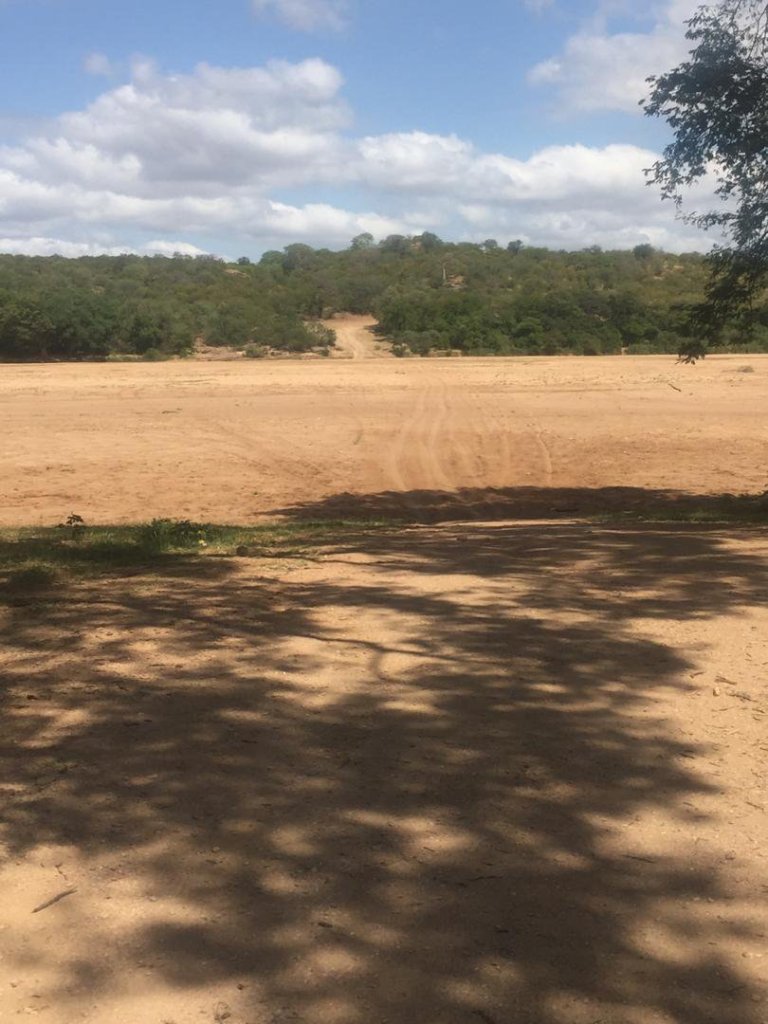
On the other side of the Shashe River is the Mabolwe Border Post, Botswana. A trip across was not easy because our Mazda B2200 would not have managed to navigate the whole width of the river without getting stuck in the wet sand. For the introduction briefing with our counterparts across we had to wade through the paddles without putting on shoes. I gave it to the local people who seem to effortlessly pass through the river. On the other side things look better – there is electricity, air-conditioned structures, running borehole water, luxuries like satellite television and mobile network for communication purposes.
The trip to and across the river gave me the opportunity to see elephants -which looked like ant-hills at the middle of the river about 3 km east – which were bathing at a said deep pool. A seemingly crushed empty Red-Bull can at the side of the road on the Botswana side was a code by goods smugglers to the transportes about where they would find the goods. The police officer who accompanied us explained that the direction of the stick inserted in it shows where the goods were cached and the can meant that the contraband was Red-Bull energy drink.
I later learnt that there was a heavy presence of elephants, leopards, hyenas, snakes, scorpions and birds. The doves were just a marvel as they foraged for grass seeds at the recently slashed border yard – the ordinary doves, the black-collared ones and the red-eyed ones were the most common.
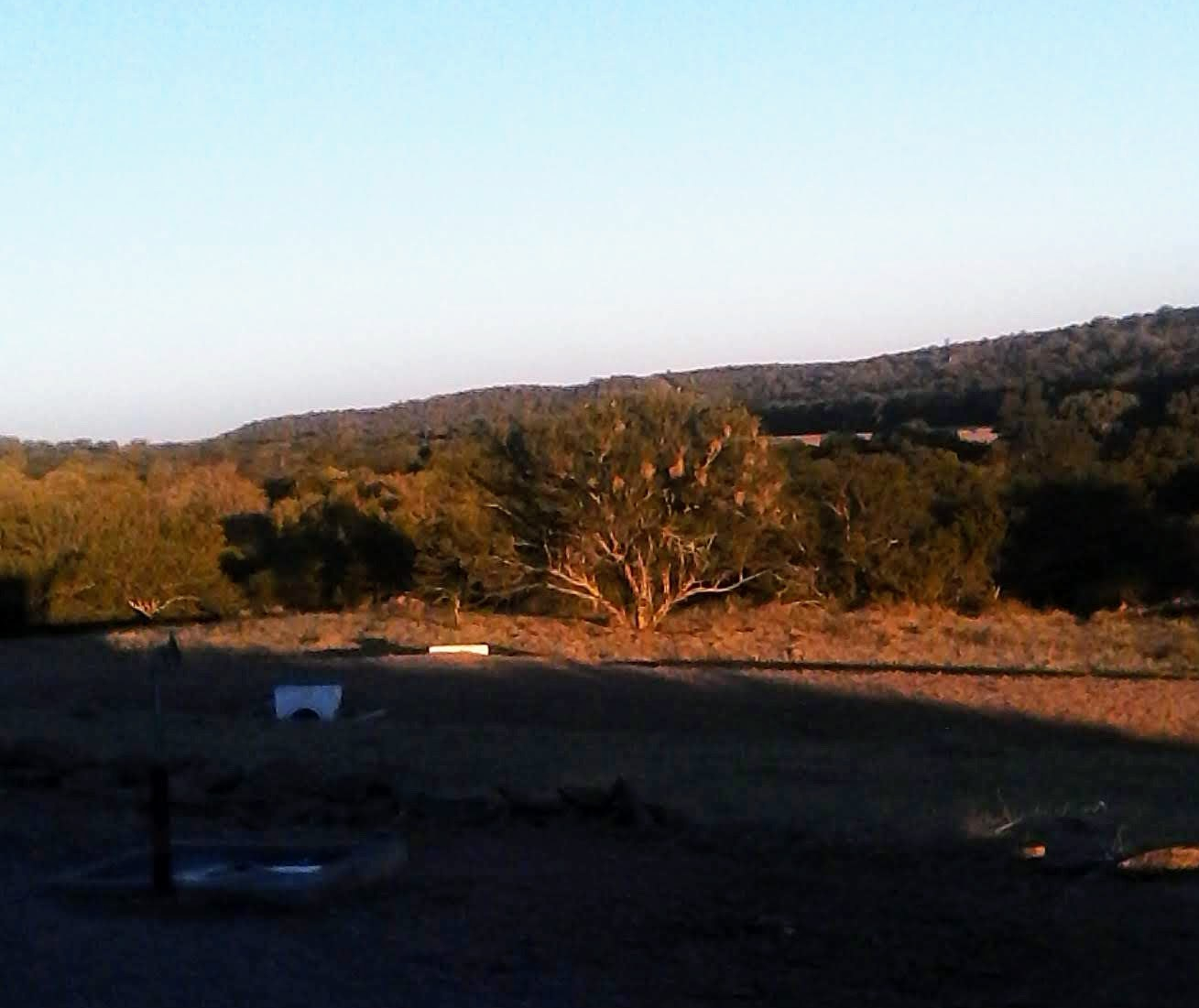
The water tap where birds would come and drink from the pool of water formed on the waterway. Just across there is a tree full of nests.
It became more of a paid holiday in the bundu than a work assignment. I made an arrangement with my counterparts at ZIMRA concerning food. We were not short on watermelons and sweet-reeds. Once in a while we could get fresh cow milk – straight from the Muraga. Muraga being the cattle kraal. However, these cattle kraals are located deep down in the forest, deep down in the pastures, far away from the homes. I believe the money the cattle herders sourced from the milk only benefited them only. Would they be honest enough to take the cash proceeds home? That’s the money they would use to buy Supa later on at the local township.
The local township is located 10 km away from the border. I had the opportunity to patronise the bars there one night. The township is powered by solar power drawn 15 km from the solar farm located at the Gorge Irrigation scheme.
Age and experience has taught me to observe things when I visit a new place. The township is the last destination for rural long-distance buses so it makes it popular with ladies of the night. These ladies can pick a new face in the crowd and I watched as the new troops of young soldiers and police support unit members jostle for the attention of one particular woman. At the end of the day the most senior among the group ‘won’ the woman. However, the most junior and youngest had cash so at the end of the day won the heart of the lady. Later on I heard that whoever among the group would have cash is the one who would enjoy the company of the lady. I hope they practise safe sex because my sources even told me that once a new troop comes in there is an unwritten agreement that they recommend ladies to their buddies.

I took the opportunity I was at Mlambapele to read former United States First Lady (FLOTUS), Hillary Rodham Clinton’s memoirs – LIVING HISTORY – a thick volume by any standards. That was before, another former FLOTUS, Michelle LaVaughn Obama, had published her memoirs – BECOMING. At that time, last year, I wanted to try to understand how first ladies behave, especially after having witnessed how our own former First Lady, Grace Ntombizodwa Mugabe behaved towards the end of her husband’s tail-end of his political career. For a place where there is no distraction I dived into the book and finished reading before my tour of duty. I took note of how the young soldiers abhorred reading books – I wished I had brought Colin Powel’s A SOLDIER’S WAY or Fred Kaplan’s THE INSURGENTS – to at least inspire the young Lieutenant who was the commander of both the Army and Police, by virtue of being a commissioned officer.
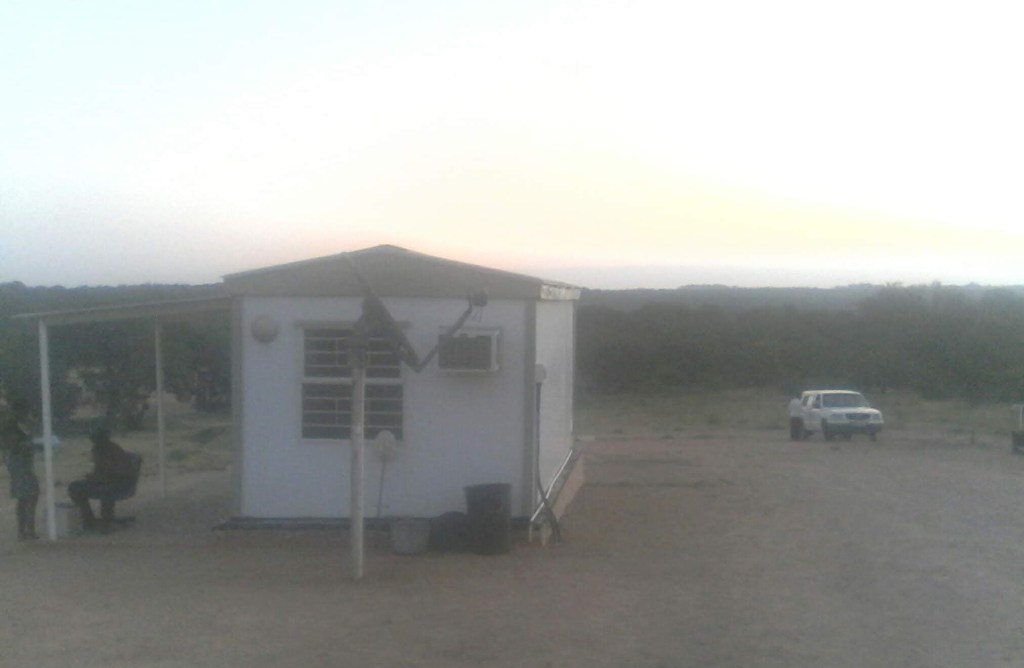
Before the end of the day both Immigration and ZIMRA sends daily statistics to their respective Regional Offices and this was the most exciting time for everyone. Once the generator roared into life, then we knew that internet will be on. This was short lived though because two days after my arrival the people from ZIMRA administration came from Bulawayo and changed the passwords. From a governance point of view it made sense to me but considering that it was an unlimited data and only used for an hour the ZIMRA administrators were a bit harsh on us ‘outsiders’.
The following day I sent someone to get me airtime from Bololong Village in Botswana so that I could use my Botswana Mascom line, but alas, things went bad for me – my phone was hit by a virus and I lost everything. I sent a ZIMRA official to get my phone fixed at Manama mission where ZIMRA personnel is housed and the technician was not even there. Things got worse for me, he managed to fix my phone but his price was twice the price charged at Plumtree and three times that charged in Bulawayo – talk of unfair pricing due to lack of competition. This ate into my cash for daily provisions and since there was no financial transactions which could be carried out in the bush, I adjusted my daily meals from three meals a day to two meals a day.
After work and before sunset, the officers and others from Zimbabwe would meet in the dry river bed with our Botswana counterparts to play ‘beach soccer’. That’s much for bonding and building good relations.
The border site is where Muragas where once located, so the cattle still come, retire and chew the cud at night. The other reason is, the clearing gives the cattle enough room to run away from the marauding hyenas at night. The area is prone to rabies because there are large packs of these wild animals. To protect their cattle from attacks by hyenas, the local people made sure that about three quarters of the herd had loudy bells around their necks. On average a herd is about twenty cattle. During the night there can be two or three herds. The troops cook their food using firewood just near our sleeping quarters and their barrack. During the day they eat watermelons, groundnuts, mealie cobs etc. Later during the night, cattle will come to eat the melon rinds, groundnuts shells, etc. Then it becomes an issue- the noise made by the bells and the sheer number of the cattle. The hyenas also pounce during the night. The cattle would stampede down the road rattling their noisy bells. In tow, the hyenas will be in pursuit. During my tour, the hyenas never made a successful hunt though.
Challenges arose during the night. Once I wanted to use the toilet, which is located about twenty metres away from the sleeping quarters. I judges that since there were lots of cattle outside there were no hyenas around. Just as I stepped out, I was kept on check by growling dogs. The growls were so aggressive and intimidating. I retreated back and used the bucket system. I later learnt that the locals train their dogs as guard dogs by keeping them at the cattle pens together with the cattle. So they become part of the cattle herd and they are aggressive to any stranger who appear to be disturbing their peace.

One morning I woke up to find a cat on my doorstep. I was frightened because I never expected to see a cat in the bush. I am very cautious when I deal with cats because I was once attacked by our pet cat long ago. We used to be good friends but on that particular incident I mistakenly stepped on its tail and it lashed onto me.
I negotiated my way out and just like an ordinary domestic cat, the tom cat mooed and rubbed itself on my trousers leaving its fur on my uniform. It followed me to the office where I later discovered that it was once a wild cat which has since become part of the border family. It deals with the issue of snakes at the office and rats. Since that day I made sure I fed it. Snakes, Snakes, Snakes- Mlambapele is the home of snakes. I saw a black mamba slithering across the road towards the support unit tent on the Northern side of the border. The members there have come to tolerate it. So much of avoiding human-animal conflict.
Once there was one Cobra which was found lifeless at the middle of the hot riverbed. An argument arose as to what had happened to it. Some said it had been dropped by a Bateleur eagle (Chapungu) which had swooped and whirled past the sky, some said it had tried to cross the hot river bed but had succumbed to the hot sand. I only concluded that there was a dead cobra at the middle of the river. My first year college modern physics knowledge kicked in and I understood that the most dangerous period to approach a dead snake was thirty minutes after its death. That it will detect the vibrations of an approaching warm bodied animal and use the thermal sensors on its head to strike and venomously paralyse the animal. I kept my distance away from it.
The crushed Red-Bull can story got me thinking. How rampart is the said smuggling of goods at this remote outpost of a border in the middle of the forest?
From what I got smuggling is very rampart and it occurs during the middle of the night.
Judging by the type of people I saw and the vehicle I saw during the 10 day period I was at Mlambapele-Government of Zimbabwe might be losing or potentially losing a lot of revenue. The presence of Elephants and indigenous trees such as Mukwa and the presence of high value four wheel drive vehicles with people just claiming to have come to see the border. Funny enough some of these people are government officials and they even refuse to sign in the visitors register. Since it was an elections campaign season, they might have been people who were only curious to follow the road and find out what was at the end of it.
Talk of Ndunge. That was one man who was a larger than life character, I guess. A brand new double cab Toyota Hilux, without even number plates arrived at the border. Its occupants were two adult male South Africans. I didn’t understand why they drove from Johannesburg via Botswana then Bulawayo, Harare and then Chipinge. I would have expected them to use the Beitbridge route then take Beitbridge to Masvingo road branching out at Ngundu Halt to Chipinge. They said that was the route which was prescribed by chief Ndunge for them to use before the new vehicle had been taken home from the garage. Where was home? Home was Soweto. At least their ZIMRA papers were insufficient and they had to go back and get sufficient documentation.
Looking at the bigger picture- the Mabolwe/Mlambapele border crossing has potential to spur economic growth at the marginalised Gwanda South district if a proper border post is established. If a proper modern bridge is constructed at the Shashe River.
A colleague told me of a sad story which happened during his period at the Border. He told a story of the local guys who are making money by pushing the vehicles which would have been stuck in the wet river bed sand. On that particular incident he said that a 2018 Land Rover Discovery arrived just after it had rained and there was water flowing in the river. The local loafers persuaded the driver to make a go since his was a four-wheel-drive powered vehicle. The vehicle failed the test and the engine was affected. He had to make arrangements with his friend to bring a tractor to pull him out and he is said to have forked out in excess of USD$20 000 to fix his vehicle.
A properly structured Border will relieve the pressure at Beitbridge as it will funnel traffic via Martin’s Drift to Mabolwe then Gwanda.
The other day a Botswana police patrol helicopter made a pass on the Botswana side of the Shashe. As the helicopter went round the mountain a well maintained military track could be seen on top of the mountain.
As I packed my bags for the return journey to Plumtree, I thought of the good infrastructure at Mabolwe ( the Botswana Border across the Shashe River), I thought of their Police, off-road, 4×4 wheel drive, Toyota Hilux which effortlessly made several trips across the river-bed – bringing deportees, I thought of the Botswana officers who, for the love of watermelons from Zimbabwe, would settle down at the river bank and eat before going back to the foot and mouth quarantine point and disinfect themselves before they go back to work without being tempted to abuse their office and bring the watermelons into their territory
I thought of Acemoglu and Robinson’s highly acclaimed novel, “WHY NATIONS FAIL”, and their theory that strong inclusive political and economic institutions are a vehicle for prosperity. The writers even made a comparison between Botswana and Zimbabwe (p410) and there is no better illustration than the Mabolwe/Mlambapele border cases.
 The Truth!
I remember the place vividly. I did the Pioneer trip about 8 years ago. You clearly portrayed it as I remember it including the Headman Ratansi turnoff.
Sad about the passwords and pricey tech.
Big up that you did not chose to wallow in misery.
On Fri, 3 May 2019, 15:42 Joe’s True Crime Blog, wrote:
> Lucky J. Matyora posted: ” It was a cooling off ten-day period. At short > notice I had to go for relief duties – from 21 to 30 April 2018 – at an > Immigration outpost, Mlambapele Border Post, about 370 km away from my home > station, Plumtree Border Post. A journey of three p” >
LikeLike
With proper planning and resource allocation, it is a viable national project.
LikeLiked by 1 person